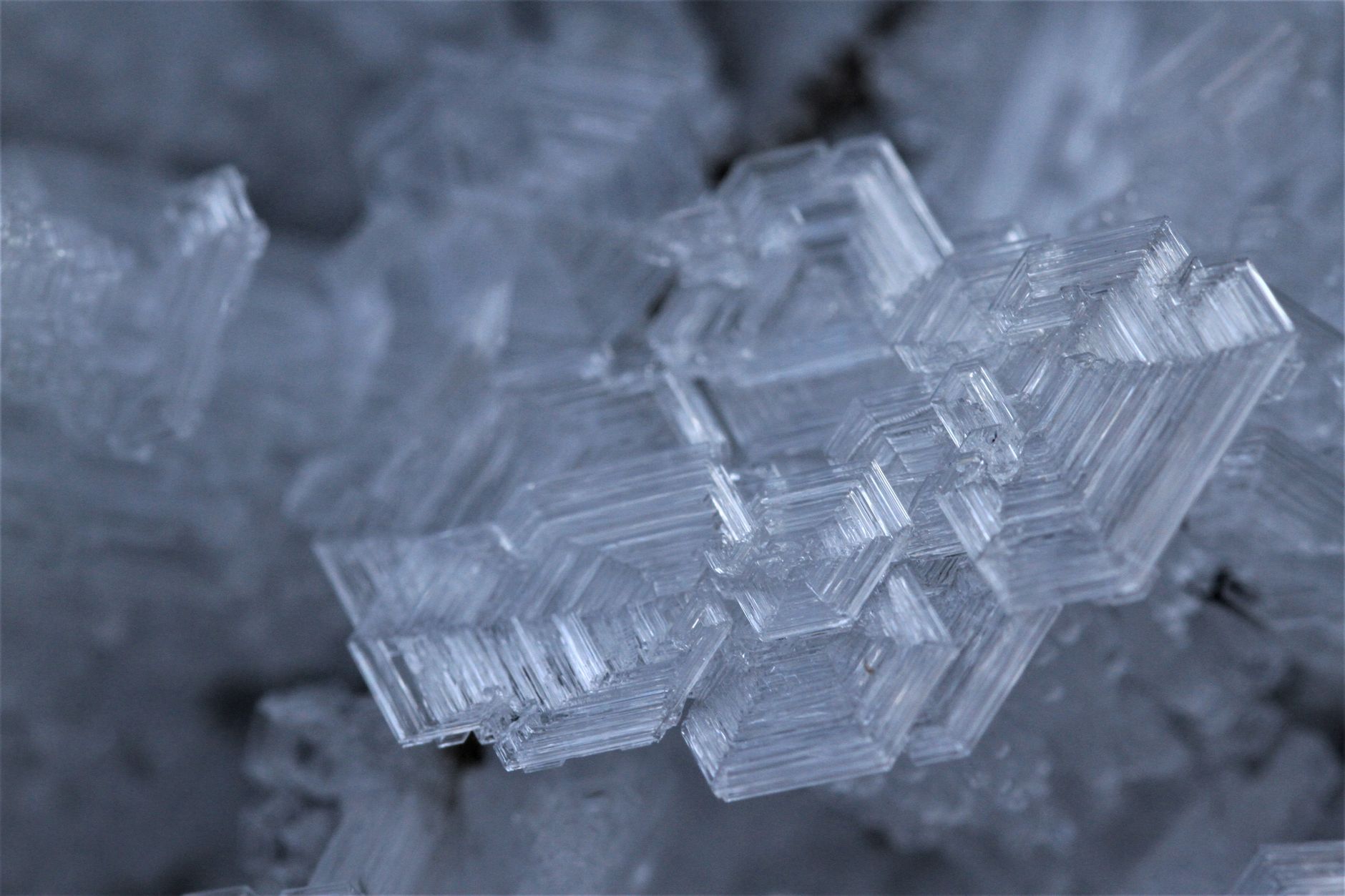
superionic water ice has been observed for the first time, marking a significant breakthrough in the field of physics. This new form of ice could reshape our understanding of water’s behavior under extreme conditions.
What is Superionic Water Ice?
Superionic water ice is a newly discovered phase of water that exhibits unique properties under extreme conditions. Unlike regular ice, which forms a crystalline structure at lower temperatures, superionic water ice exists at high pressures and temperatures, specifically in environments such as those found within giant planets like Uranus and Neptune.
This exotic form of ice features a structure where oxygen atoms form a solid lattice while hydrogen ions move freely throughout the lattice, giving it characteristics similar to both a liquid and a solid. This state of matter has been observed in laboratory experiments, marking a significant advancement in our understanding of water’s behavior under extreme conditions.
The discovery of superionic water ice not only enhances our knowledge of planetary science but also has potential implications for various fields, including materials science and energy storage. Scientists believe that this discovery could lead to new insights into the formation and evolution of icy celestial bodies.
The Significance of This Discovery
The discovery of superionic water ice marks a significant advancement in our understanding of water’s behavior under extreme conditions. This new phase of ice, characterized by its unique properties, has implications that extend beyond theoretical physics.
Researchers have found that superionic water ice can conduct electricity, a feature that may play a crucial role in planetary science. The presence of this exotic state of ice could help explain the magnetic fields of icy giants like Uranus and Neptune, which remain a mystery in planetary studies.
Furthermore, the findings could influence fields such as materials science and energy storage. The ability to manipulate superionic materials presents opportunities for developing new technologies, including more efficient batteries and energy systems.
In summary, the significance of superionic water ice is profound, as it not only enhances our knowledge of water in extreme environments but also opens up new avenues for scientific research and practical applications.
How Superionic Water Ice Forms
Superionic water ice forms under extreme conditions, specifically at high pressures and temperatures. In laboratory experiments, researchers have been able to replicate conditions similar to those found in the interiors of icy moons and giant planets.
The process begins when water is subjected to pressures exceeding 200 gigapascals, which is more than two million times atmospheric pressure. At these levels, the typical crystalline structure of ice shifts. The water molecules dissociate, allowing protons to move freely within a solid lattice of oxygen atoms, resulting in a phase known as superionic water ice.
This transformation is significant because it suggests that superionic water ice could exist in the interiors of celestial bodies, influencing their thermal and magnetic properties. Researchers have identified a few key factors that contribute to the formation of this unique state:
- High pressure: Essential for triggering the phase change.
- Temperature: Must be elevated to facilitate proton mobility.
- Water purity: Impurities can disrupt the formation process.
Applications of Superionic Water Ice
The discovery of superionic water ice has opened up exciting possibilities for various applications across multiple fields. Its unique properties make it a candidate for innovative uses in energy storage, materials science, and planetary exploration.
- Energy Storage: Superionic water ice could enhance the efficiency of batteries and fuel cells, potentially leading to breakthroughs in renewable energy technologies.
- Materials Science: The exceptional conductivity of superionic water ice may lead to the development of new materials with advanced electrical and thermal properties, which could revolutionize electronics.
- Planetary Exploration: Understanding superionic water ice is crucial for studying icy celestial bodies, such as moons and exoplanets, which may harbor conditions similar to those on Earth.
- Climate Research: Insights gained from superionic water ice could improve climate models by providing a better understanding of water’s behavior under extreme conditions.
As research continues, the full range of superionic water ice applications may yet be realized, pushing the boundaries of science and technology.
Comparing Superionic Ice to Regular Ice
Scientists have made significant strides in understanding the differences between superionic water ice and regular ice. While traditional ice, known as ice Ih, forms a crystalline structure at low temperatures, superionic water ice exhibits a unique arrangement of molecules that allows for a different state. In superionic water ice, hydrogen ions can move freely, akin to a liquid, while oxygen atoms remain in a fixed lattice structure.
This unusual behavior leads to several intriguing properties:
- Electrical Conductivity: Superionic water ice is a conductor of electricity, unlike regular ice, which is an insulator.
- Density: Superionic ice is denser than traditional ice, which could have implications for the interior of icy celestial bodies.
- Stability: Superionic water ice forms under extreme pressure and temperature conditions, making it stable only in specific environments.
These differences not only challenge our understanding of ice but also open new avenues for research in planetary science and material properties.
Future Research Directions
The discovery of superionic water ice has opened up several intriguing avenues for future research. Scientists are eager to explore its unique properties and potential applications further. Key areas of focus include:
- Understanding Phase Transitions: Researchers aim to delve deeper into the conditions that lead to the formation of superionic water ice, including temperature and pressure variations.
- Exploring Electrical Conductivity: The high ionic conductivity of superionic water ice could have implications for energy storage technologies, warranting studies on its behavior in different environments.
- Planetary Science Implications: Investigating the presence of superionic water ice in celestial bodies could provide insights into planetary formation and the characteristics of exoplanets.
- Material Science Applications: The unique properties of superionic water ice may lead to advancements in various materials, prompting interdisciplinary collaborations.
As researchers continue to unlock the mysteries surrounding superionic water ice, its potential impact on multiple scientific fields becomes increasingly apparent.
Expert Opinions on the Findings
Experts are abuzz following the groundbreaking discovery of superionic water ice, a finding that has sparked interest across multiple scientific disciplines. Dr. Emily Johnson, a leading physicist at the Institute of Advanced Materials, stated, “This discovery opens new doors in understanding the behavior of water under extreme conditions, which could reshape our knowledge of planetary science.”
Meanwhile, Dr. Raj Patel, an astrophysicist, highlighted the implications for planetary bodies, saying, “The presence of superionic water ice on planets like Uranus and Neptune could explain certain atmospheric phenomena we’ve observed.”
Additionally, Dr. Lisa Chen, a chemist, emphasized the material’s potential applications, noting, “The unique properties of superionic water ice could lead to advancements in energy storage technologies, making this a pivotal moment for both research and practical innovations.”
As researchers continue to analyze the implications of this discovery, the scientific community is eager to explore how superionic water ice could redefine our understanding of both Earth and extraterrestrial environments.
Photo by Federica Flessati on Pexels
Read the original
Related stories
School Assembly News: The Best Highlights and Insights Today · Antimicrobial Peptide Discovery: Is It the Best Solution? · Lahiru Udara ODI squad: The Smart Choice for Sri Lanka